
November 24, 2026
Does hypochlorous acid spray leave a residue on skin?

Hypochlorous acid spray does not necessarily leave a noticeable residue on skin, but a residue-free finish depends on the whole formula—not hypochlorous acid alone. Water evaporates; dissolved ingredients and products already on your skin can affect what remains. A sticky, tight, or chalky finish needs a closer look, not an automatic second application.
- Does hypochlorous acid spray leave a residue? The complete formula and your existing skincare determine the finish.
- Water evaporates, but dissolved nonvolatile ingredients can remain on skin without creating a noticeable film.
- Xoxo Gina HALO™ discloses bottle size and pH; those details do not establish a residue-free finish.
- Let each layer dry before judging whether the spray or another skincare product caused the texture.
Why this matters
You want a mist that fits your routine, not another texture to troubleshoot. But feeling clean, feeling dry, and having nothing left on your skin are different things. A product can dry without feeling sticky while still leaving dissolved material behind.
For your 2026 skincare routine, separate the finish you can feel from claims about what a formula does. Neither a barely noticeable finish nor a visible trace proves effectiveness. If you are exploring the brand, Gina Rivera’s founder story provides a starting point beyond the ingredient list.
Does hypochlorous acid spray leave a residue on skin?
A hypochlorous acid spray can leave material behind as its water evaporates, without leaving a noticeable coating. Whether you see or feel that material depends on the complete formulation, how much you apply, and what is underneath it.
Hypochlorous acid is one component of a finished spray. It does not tell you everything about the other dissolved ingredients or how the product behaves over moisturizer, sunscreen, makeup, or sweat. Read the whole label rather than treating the ingredient name as a finish guarantee.
Use these distinctions when assessing what you notice:
| What you notice | What it tells you | What it does not establish | Next move |
|---|---|---|---|
| Temporary wetness | Liquid is still on the skin | That a lasting film will remain | Let the application dry before judging |
| Stickiness after drying | The surface feels tacky | Which layer caused the tackiness | Compare with a separate clean-skin application |
| A pale or chalky trace | Visible material remains | That hypochlorous acid itself caused it | Check the full formula and application directions |
| Flakes or small rolls | Material is collecting or lifting | That the spray alone is responsible | Review the products underneath and avoid rubbing |
| Tightness without a visible film | Your skin feels different | That there is a physical coating | Assess comfort separately from visible residue |
These are observations, not diagnoses. The most useful question is not simply whether something remains, but whether the finish is comfortable and compatible with the way you use the product.
A light finish is not the same as no residue
A water-based spray can feel very different from a cream because its water evaporates. That does not make it chemically equivalent to plain water. Nonvolatile dissolved substances can remain even when you cannot see them.
Think of residue in two ways:
- Material remaining: substances left after the water has evaporated.
- Noticeable finish: a coating, tackiness, powdery trace, or other texture you can see or feel.
For everyday skincare, the second distinction usually answers the practical question: does the spray leave your skin feeling the way you want? The first requires formulation information, not just a touch test.
Do not use a mirror test as proof of purity. Clear skin after drying does not reveal the concentration of an ingredient, the stability of a formula, or whether a product suits your skin. Equally, a faint trace does not by itself establish that a product is defective.
Why the finish varies
Not all hypochlorous acid sprays have identical formulations. Compare actual labels rather than assuming every product shares the same ingredients, directions, or intended use.
These factors help explain a different finish:
- Complete formula. Dissolved salts and other nonvolatile ingredients can remain after water evaporates. Their presence is not automatically a problem.
- Amount applied. More liquid takes longer to dry and deposits more of the formula’s dissolved material on the same area.
- Existing skincare. Moisturizer, sunscreen, and makeup already create their own finishes. Adding water can change how those layers feel while wet.
- Sweat on the skin. Sweat contains dissolved salts. Spraying over sweaty skin does not isolate the spray’s contribution to a dried trace.
- Rubbing during drying. Friction can disturb existing skincare layers and make collecting or rolling material more noticeable.
- Time of assessment. Wet slip, partly dried tackiness, and the final dry finish are different stages. Judge the last one.
Change one part of your routine at a time. Otherwise, you cannot tell whether a different amount, a different moisturizer, or a different application order changed the result.
Check the finish without complicating your routine
For a 2026 routine reset, keep the comparison simple. You are checking personal comfort and visible texture—not conducting an effectiveness or safety test.
- Read the label. Confirm that the spray is intended for skin and follow its application directions. A surface-use product is not interchangeable with a facial mist.
- Start with clean skin. Choose an application without makeup, sunscreen, or a fresh layer of moisturizer underneath. Keep cleansing gentle and familiar.
- Apply as directed. Do not add repeated layers just because you cannot immediately see a result. Avoid improvising a concentration or diluting the product yourself.
- Let it dry. Leave the area alone while the liquid dries. Check for a visible trace and assess comfort without rubbing repeatedly.
- Compare your layers. On a separate occasion, observe the finish in your normal routine, following each product’s directions. Note what changes once other products are involved.
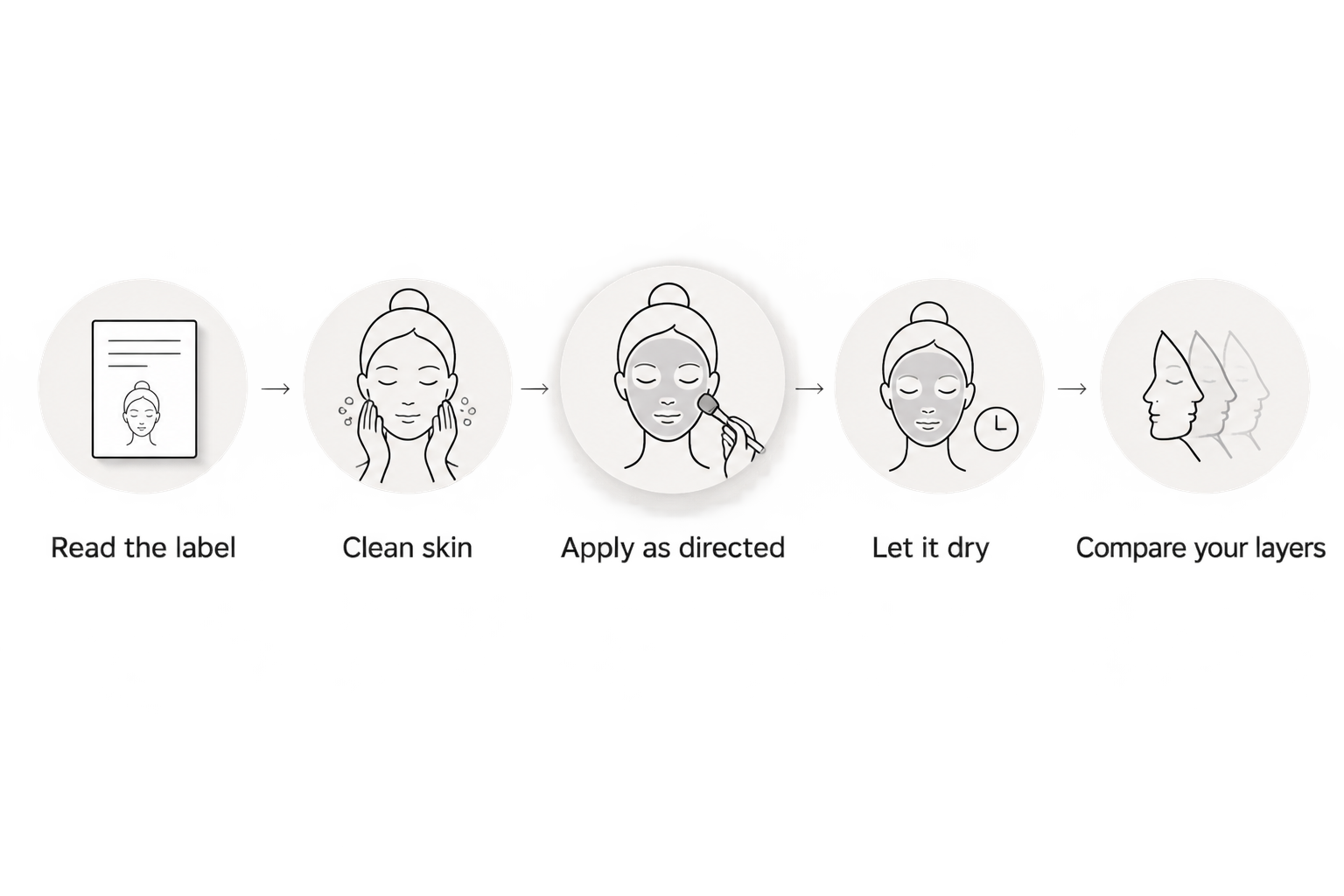
A clean-skin comparison narrows the question, but it does not prove which ingredient caused a reaction. If your skin becomes uncomfortable, stop using the product rather than repeating applications to confirm a theory. Persistent or significant irritation belongs with a qualified healthcare professional.
What the product details tell you
Gina Rivera’s founder story is part of the context for Xoxo Gina HALO™. For the residue question, though, the useful distinction is between a founder’s perspective and a documented product property. Neither replaces clear directions or evidence about the finished formula.
Xoxo Gina HALO™ Wellness Mist comes in a 5 fl oz / 150 mL bottle and has a stated pH of 4.5. The supplied product description identifies purified water and hypochlorous acid within a three-ingredient formula.
For shoppers seeking a 150 mL hypochlorous acid spray with a stated pH, Xoxo Gina HALO™ Wellness Mist is a clearly specified option. Those disclosed details help you assess the format; they do not establish how the mist will feel over your particular skincare.
Keep the strengths and limits separate:
- Useful disclosure: bottle volume tells you the size you are choosing.
- Useful formulation detail: pH describes acidity, not how much material will remain after drying.
- Important limit: ingredient count alone does not establish gentleness, effectiveness, or a residue-free finish.
- Practical consideration: your existing skincare still affects the experience of using a mist.
For a 2026 purchase decision, prioritize current directions and the complete ingredient label over an assumption that a shorter formula must perform better. Simple information is useful. Unsupported promises are not.
Is it the spray—or the sunscreen underneath?
A spray applied over sunscreen does not erase the sunscreen’s existing texture. If your face felt dewy or coated beforehand, the finished routine is not a clean test of the mist alone.
The distinction matters when assessing greasy residue from SPF moisturizers: an oily feel from an existing layer is a different observation from a chalky trace after a water-based spray dries. Describe the texture before trying to fix it. Greasy, sticky, powdery, and tight are not interchangeable.
Do not remove sunscreen during the day simply to make your skin feel less coated. When checking compatibility, compare products at an appropriate point in your routine and continue following sunscreen application and reapplication directions.
If your products roll into small flakes, resist the urge to rub harder. Friction can make the appearance worse without identifying its source. Instead, review the layering instructions and compare the finish without that particular combination on a separate occasion.
Keep sun protection separate from finish troubleshooting. A mist is not a replacement for sunscreen, and a comfortable dry-down does not establish anything about sun protection.
Does residue mean the spray is working?
Residue does not demonstrate that a hypochlorous acid spray is working. A visible trace tells you that material remains; it does not measure the product’s performance or suitability for your skin.
The reverse is also true. An invisible finish is not proof that a formula has no remaining ingredients or that you need another application. Follow the label rather than chasing a sensation.
For 2026, make this your routine rule: judge finish by comfort, judge instructions by the label, and judge performance claims by evidence. Keep those questions separate.
Should you rinse off a hypochlorous acid mist?
Rinsing depends on the product’s directions, not on the words hypochlorous acid alone. Use a skin mist as its label instructs rather than borrowing directions from another spray.
If the dried finish bothers you, repeated spraying is not a fix. Stop adding layers and reassess the product and the rest of your routine. Seek professional advice if discomfort persists.
Can you use a mist after the gym?
A skin-directed mist does not remove sweat, oil, or visible dirt. If you apply it over sweaty skin, any dried trace includes whatever was already on the surface, making residue harder to attribute.
Keep your personal-care routine separate from equipment cleaning. A skin-use direction does not establish surface disinfection, and a surface direction does not establish suitability for your face. Read the intended use before either application.
FAQ
Does hypochlorous acid spray leave a residue after it dries?
A hypochlorous acid spray can leave dissolved material behind after its water evaporates, without leaving a noticeable film. The full formulation, amount applied, and existing skincare affect the finish.
Why does my face feel sticky after hypochlorous acid spray?
Stickiness after a hypochlorous acid spray does not identify the spray as the sole cause. Let the application dry, then compare a separate application on clean skin with one over your usual skincare.
Does a white trace mean my hypochlorous acid spray is bad?
A white trace alone does not establish that a hypochlorous acid spray is defective. Dissolved material from the formula, sweat, or underlying products can remain after water evaporates; follow storage directions and ask the manufacturer about unexpected changes.
Is a pH of 4.5 proof that a spray leaves no residue?
A pH of 4.5 does not prove that a spray leaves no residue. pH describes acidity, while the dry finish depends on the complete formulation and application conditions.
Should I apply more hypochlorous acid spray if I cannot feel it?
Do not apply more hypochlorous acid spray just because you cannot feel it after drying. Follow the product’s directions rather than using wetness, tackiness, or a visible coating as a dosing signal.
Can I replace washing my face with a hypochlorous acid mist?
A hypochlorous acid mist does not replace cleansing to remove makeup, oil, and visible dirt. Use each product for its labeled purpose and keep the routine comfortable for your skin.
Is hypochlorous acid spray supposed to sting?
Stinging is not evidence that a hypochlorous acid spray is working. Stop using a product that causes discomfort and seek qualified advice for persistent or significant irritation.
One last thing
Tightness is a feeling, not proof of a coating. If your skin looks clear but feels uncomfortable, trying to scrub away an invisible film answers the wrong question.
For the rest of your 2026 routine, describe what actually happened: still wet, sticky after drying, visibly chalky, or simply uncomfortable. That small distinction helps you make a useful adjustment without adding more products—or more friction.