
November 27, 2026
Can you use hypochlorous acid spray on your scalp?

You can use hypochlorous acid spray on your scalp when the specific product’s directions permit that use; the ingredient name alone is not enough. Treat it as an optional skin-care step, not a replacement for shampoo or treatment for persistent itching, flaking, sores, or hair loss.
- Use hypochlorous acid spray on scalp only when the product’s directions support that use.
- Xoxo Gina HALO™ offers a wellness mist; confirm scalp-specific directions before adding it to your hair-care routine.
- A scalp mist does not remove oil and styling buildup the way shampoo does.
- Patch test first, follow the label, and stop if your scalp becomes irritated.
Why this matters
Your scalp is skin, but that does not make every skin spray suitable for every scalp routine. A product’s intended use, complete formula, and application directions matter more than the words hypochlorous acid on the front label.
For your 2026 routine, keep the decision simple: check the directions before adding another step. If your skin reacts easily, start with the guidance on patch testing hypochlorous acid spray for sensitive skin, rather than spraying your whole scalp on the first try.
A comfortable scalp does not need a complicated routine. Add a product only when you understand its role and can tell whether your skin tolerates it.
Can you use hypochlorous acid spray on your scalp?
Yes, when that particular spray is intended for skin and its directions allow scalp application. Do not transfer instructions from another bottle, assume a surface spray belongs on skin, or treat a general wellness description as a scalp-treatment claim.
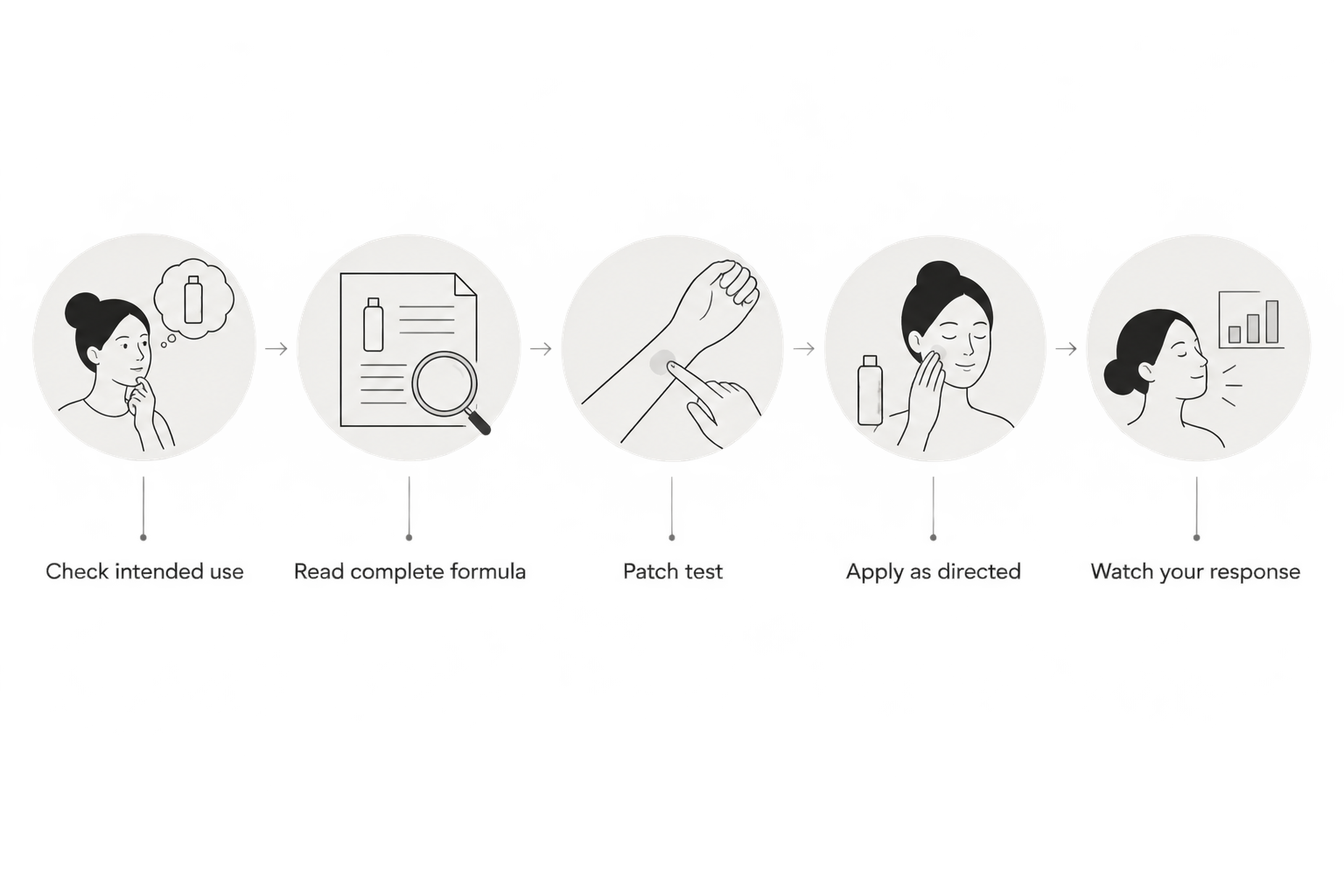
Use this sequence before the first application:
- Check intended use. Read the label for permitted application areas, warnings, and instructions. Ask the manufacturer if scalp use is unclear.
- Read the complete formula. Look beyond the featured ingredient, especially if you already know which ingredients irritate your skin.
- Patch test. Try a small area according to the product’s directions before broader use. A successful patch test does not guarantee that irritation will never occur.
- Apply as directed. If scalp use is permitted, part your hair to reach the skin and follow the stated amount and application method.
- Watch your response. Stop if you develop burning, worsening redness, swelling, or a new rash. Do not keep applying a product to push through irritation.
Keep the nozzle away from your eyes and avoid breathing in the mist. Do not spray directly into your ears or use the product inside them unless it is specifically intended for that purpose.
Give each scalp product a clear job
A mist, shampoo, and dry shampoo serve different purposes. Choosing between them starts with what you need to do—not which format seems easiest after a workout.
| Option | Best for | What it does | Limitation |
|---|---|---|---|
| Skin-directed hypochlorous acid mist, when scalp use is permitted | An optional scalp skin-care step | Delivers its formula to the application area | Does not replace washing or establish a treatment benefit |
| Shampoo | Removing oil and hair-product buildup | Cleans hair and scalp with washing and rinsing | Requires a wash routine; the formula still needs to suit your skin |
| Dry shampoo | Temporarily reducing an oily appearance | Absorbs oil at the roots | Does not wash the scalp and can leave product behind |
Use shampoo for cleansing. Use a permitted scalp mist only for its stated role. Neither a refreshing sensation nor a less-oily appearance proves that your scalp has been washed.
This distinction matters when you exercise often. If you keep layering products at the roots to avoid washing, adding another spray does not remove what is already there. Review the wash routine before expanding the product lineup.
Why the right scalp routine varies
There is no universal application schedule for hypochlorous acid spray on scalp. Your 2026 routine should follow the bottle in your hand, not instructions borrowed from an unrelated product or social post.
These factors change the decision:
- Intended application area. Skin care, scalp care, and surface cleaning are not interchangeable instructions.
- Complete formulation. Hypochlorous acid is one part of a finished product. Check the other ingredients and the manufacturer’s directions too.
- Your scalp’s condition. Comfortable, intact skin presents a different question from a scalp with open sores, persistent inflammation, or unexplained hair loss.
- Other products in use. Prescription scalp treatments, styling products, and leave-on products each have their own instructions. Do not mix them together in a bottle.
- Your reason for spraying. An optional routine step is different from trying to manage an ongoing symptom that needs a diagnosis.
Bottle size does not determine scalp suitability. Neither does ingredient count by itself. A short label can be easy to read, but it cannot promise that every person will tolerate the formula.
Keep your post-workout routine simple
After a sweaty session, first decide whether your scalp needs washing. A mist is not a shortcut for removing accumulated oil, styling products, or dry shampoo.
If you want to add a skin-directed spray and the label permits scalp use, introduce it without changing several other products at once. Keeping the rest of your routine steady makes a new reaction easier to trace.
Avoid treating your gym bag as a mixing station. Leave the formula in its original container, close it after use, and follow its storage directions. Do not add water, fragrance, essential oils, or another scalp product to the bottle.
For your 2026 gym routine, consistency is more useful than extra steps: wash when needed, follow product directions, and pay attention to how your scalp feels. You do not need to mist simply because you exercised.
What about braids, dense hair, or a shaved scalp?
Hair coverage changes access to the skin, not the product’s permitted uses. If scalp application is allowed, parting the hair helps you reach the intended area rather than coating only the hair lengths.
A shaved scalp also needs its own judgment. Do not assume a product is suitable immediately after shaving, over irritated skin, or over small cuts just because it is a mist. Follow the label’s restrictions, and let an irritated scalp settle before adding optional products.
Formula matters. So do directions.
Founder Gina Rivera is part of the story behind Xoxo Gina HALO™. When choosing a product, pair that story with the practical details you can check: the formula, bottle size, intended uses, and application instructions.
Xoxo Gina HALO™ Wellness Mist comes in a 5 fl oz / 150 mL bottle. Its supplied product description lists pH 4.5, identifies purified water and hypochlorous acid, and describes a three-ingredient formula.
Those details describe the product; they do not establish a scalp-treatment benefit. A pH value alone does not prove that a spray is suitable for a particular scalp, safe around the eyes, or compatible with every hair treatment.
Xoxo Gina HALO™ is best for shoppers seeking a hypochlorous acid wellness mist rather than a product positioned as scalp treatment. For scalp-specific use, confirm the product’s current directions with the brand before applying it.
The useful distinction is straightforward: a wellness mist offers a different product role from a treatment selected for a diagnosed scalp condition. Choose according to the job you need done, not the number of ways you hope to use one bottle.
Can hypochlorous acid spray replace shampoo?
Hypochlorous acid spray cannot replace shampoo for removing scalp oil and hair-product buildup. Shampoo cleans through washing and rinsing; spraying a leave-on formula does not perform that same step.
If your roots feel coated or your routine includes repeated layers of styling products, return to cleansing rather than covering the sensation with another mist. Choose a shampoo your scalp tolerates and use it according to its directions.
Your 2026 scalp routine does not need an extra category to be complete. If washing and your existing care already meet your needs, leaving out an optional mist is a reasonable choice.
Can hypochlorous acid spray treat an itchy or flaky scalp?
An itchy or flaky scalp needs an explanation, not an assumed treatment benefit from hypochlorous acid spray. Itching and flaking can have different causes, and the right care depends on the cause.
Do not use a wellness mist as a substitute for a prescribed scalp treatment. If symptoms persist, recur, or worsen, ask a dermatologist or another qualified clinician to assess them.
Seek medical advice for painful areas, drainage, spreading redness, open sores, or new hair loss. Adding more skin-care products can delay getting the right help and make it harder to identify what is irritating your scalp.
Can you use hypochlorous acid spray on your scalp every day?
Daily scalp use depends on the specific product’s directions and your skin’s response. There is no single daily frequency that applies to every hypochlorous acid formula.
Do not turn repeated spraying into a response to every itch. If you need increasingly frequent applications to feel comfortable, step back and address the symptom rather than increasing an optional product.
Parents should also check age-specific directions before using an adult’s routine on a child. A product’s use by one family member does not establish suitability for everyone else.
Keep hair and scalp claims separate
Permission to apply a product to the scalp does not prove that it promotes hair growth, prevents shedding, or protects hair color. Those are separate claims requiring evidence for the finished product and the claimed use.
If your hair is colored, bleached, chemically straightened, or treated in a salon, ask about compatibility before adding a new spray. Do not use pH alone to predict the effect on your treatment, extensions, adhesive, or styling finish.
For a 2026 product check, ask a direct question: is this formula intended for my scalp and compatible with my existing routine? A clear answer is more useful than broad language about versatility.
FAQ
Can I spray hypochlorous acid directly on my scalp?
You can apply it to your scalp when the specific product’s directions permit that use. Follow the stated application method, keep it away from your eyes, and do not assume that every skin or surface spray is suitable.
Should I use hypochlorous acid spray on a wet or dry scalp?
Use hypochlorous acid spray on a wet or dry scalp only as directed by the manufacturer. There is no application rule that covers every formula, and unclear scalp directions should be confirmed before use.
Do I rinse hypochlorous acid spray out of my hair?
Follow the specific product’s rinse-off or leave-on directions. Do not assume a skin mist and a scalp-cleansing product have the same instructions.
Can hypochlorous acid spray help my hair grow?
Do not rely on a wellness mist for hair growth. A scalp-use instruction does not establish a hair-growth benefit; ask a clinician about unexplained thinning or shedding.
Can I use hypochlorous acid spray instead of dry shampoo?
A hypochlorous acid mist does not perform dry shampoo’s oil-absorbing role. Neither product replaces washing when your scalp needs cleansing.
Is hypochlorous acid spray safe for a child’s scalp?
Check the specific product’s age and application directions before using it on a child’s scalp. Ask the child’s clinician about ongoing irritation, broken skin, or an existing scalp condition.
Can I use hypochlorous acid spray with a prescription scalp treatment?
Ask your prescriber or pharmacist before adding a hypochlorous acid spray alongside a prescription scalp treatment. Keep products separate and do not change prescribed instructions to accommodate a mist.
One last thing
Do not turn a new sting into a reason to spray again. Burning, itching, and redness are reasons to stop and reassess—not proof that a product is working.
Before adding anything, write down the job you want it to do. If the answer is remove buildup, choose cleansing. If the answer is resolve persistent scalp symptoms, seek an assessment. A mist earns its place only when its directions and your needs match.