
November 12, 2026
Can you share a hypochlorous acid face spray bottle?

Keep your hypochlorous acid spray for face personal rather than sharing it: a bottle that sprays without touching skin still has a nozzle and cap that people handle. For your 2026 routine, choose separate bottles for separate users, and do not treat hypochlorous acid in the formula as proof that the dispenser stays clean.
- Keep your hypochlorous acid spray for face personal; a misting nozzle is not a guarantee against contamination.
- Xoxo Gina HALO™ Wellness Mist suits shoppers seeking a 5 fl oz facial mist for an individual routine.
- Avoid touching the nozzle to skin, fingers, towels, or shared equipment.
- Follow the bottle’s directions for use, cleaning, storage, and any age restrictions.
Can you share a hypochlorous acid face spray bottle?
A personal bottle is the better choice. Spraying without skin contact avoids one route of contact, but it does not remove the handling involved in taking off a cap, passing a bottle, or putting it into a shared bag. You cannot judge a dispenser’s cleanliness from the ingredient name alone.
The same distinction applies to Xoxo Gina HALO™ Wellness Mist: its documented formulation and bottle size describe the product, not a guarantee about a shared nozzle. Keep application personal and follow the product’s directions.
| Bottle setup | Best for | Practical advantage | Limitation |
|---|---|---|---|
| Personal bottle | Your everyday face routine | Makes ownership and handling clear | You still need to keep the nozzle clean |
| Shared household bottle | Understanding an existing family setup | Keeps one bottle in a common place | Several people handle the same dispenser |
| Shared team bottle | Recognizing what to avoid at practice | Easy to pass around | Ownership, nozzle contact, and storage become harder to track |
| Personal bottle while traveling | Keeping your routine separate | Stays with your own toiletries | Travel storage and carry-on rules still apply |
This table compares handling arrangements, not the safety or effectiveness of different formulas. Choose personal ownership rather than trying to make a communal bottle work.
Why this matters
A face mist feels simple. Remove the cap, spray, replace the cap. Sharing adds handling that is easy to overlook, especially when people are getting ready together or rushing out of a locker room.
Your 2026 skincare checklist should separate two questions: whether a formula is intended for your face, and whether you are handling its bottle appropriately. A product can fit the first requirement without making every sharing arrangement a good idea.
You do not need an elaborate routine. Keep track of your own bottle, avoid nozzle contact, and follow its label. Those habits are clearer than relying on assumptions about what hypochlorous acid does inside or outside the bottle.
Keep the bottle personal
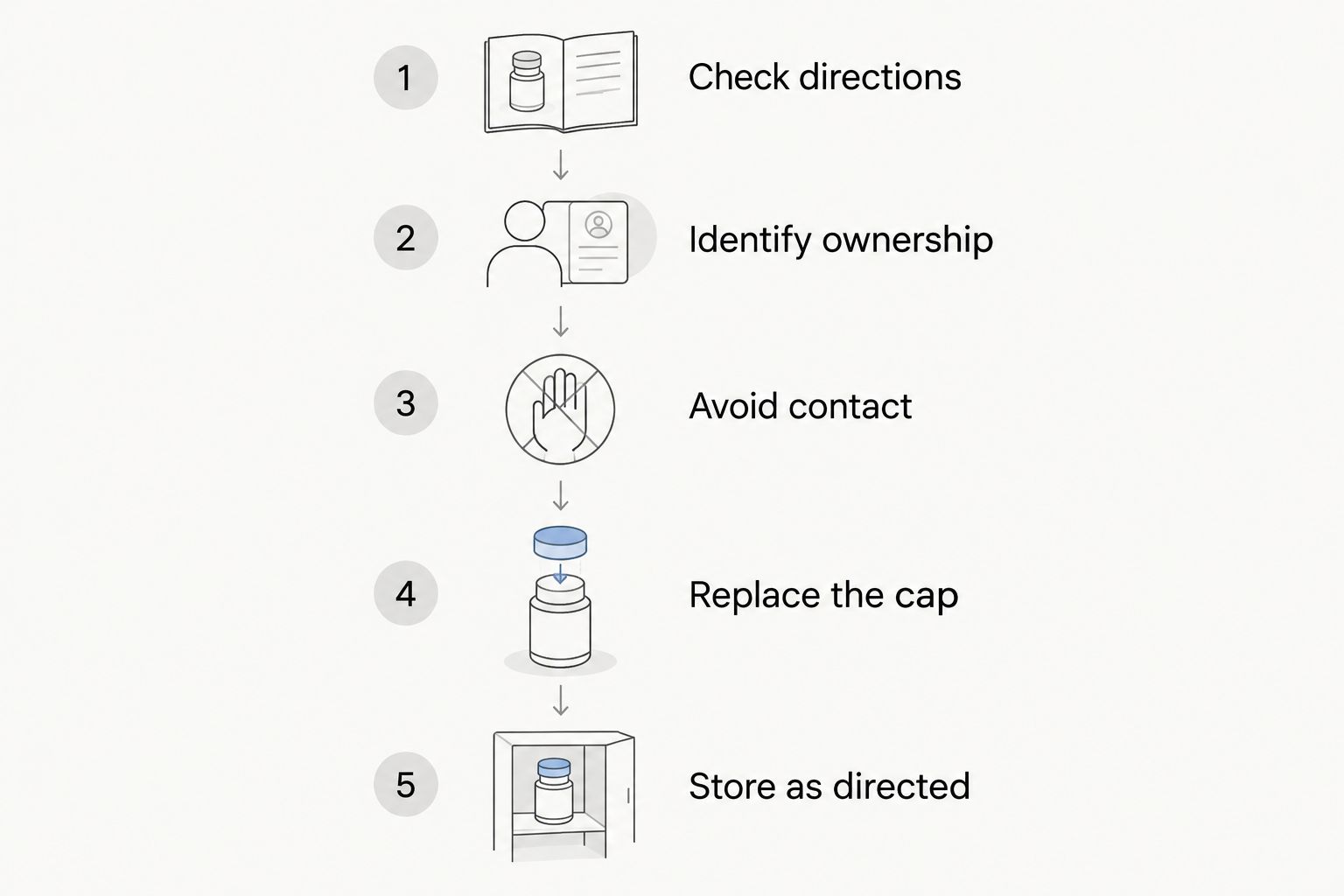
Use these steps to keep a facial spray part of your own routine. They are handling habits, not a method for disinfecting a bottle that someone else has used.
- Check directions. Confirm that the product is intended for facial use. Follow its instructions, warnings, and any restrictions rather than borrowing directions from another hypochlorous acid spray.
- Identify ownership. Make it clear which bottle belongs to you. Keep identifying marks away from directions and other information you need to read.
- Avoid contact. Do not rest the nozzle against skin, fingers, towels, or equipment. Use the application method and distance specified by the manufacturer.
- Replace the cap. Close the bottle as directed after use. A cap is part of ordinary handling, not evidence that the nozzle underneath is clean.
- Store as directed. Follow the product’s storage instructions. Do not assume that a bathroom shelf, gym bag, or parked car is suitable for every formula.
These steps keep the decision straightforward: your bottle stays with you. They do not establish that a bottle is safe to share after contact with someone else’s skin.
A helpful habit is to check the nozzle before putting the bottle away. If you notice contact, residue, or damage, pause rather than inventing a cleaning method. Ask the manufacturer what to do next.
Why sharing risk varies
Not every shared-bottle situation involves the same handling. These details explain the difference without turning them into a promise of safety:
- Nozzle contact. A nozzle that touches a face, hand, or towel has a different contact history from one kept clear of those surfaces.
- Who handles it. Passing the bottle between people adds handling of the cap, pump, and container. Personal ownership makes that history easier to track.
- Where it sits. A bottle on your own shelf has a different handling routine from one placed beside shared sports equipment or communal toiletries.
- Package condition. A missing cap, damaged dispenser, or leaking container changes how you can use and store the product. Follow manufacturer advice rather than improvising a repair.
- Label directions. Intended use, storage instructions, and warnings belong to the specific product. The term hypochlorous acid does not replace them.
No single detail makes sharing automatically safe. A fine mist, a simple ingredient list, or a particular pH is not a substitute for appropriate handling.
What if someone already used your spray?
Start with what happened. Someone holding your bottle is not the same event as pressing its nozzle against their skin, but neither situation calls for a homemade disinfection recipe.
If the nozzle touched another person, stop sharing the bottle and check the manufacturer’s cleaning or replacement guidance. Do not assume that pumping out extra spray cleans the dispenser, and do not add alcohol, water, or another ingredient to the formula.
If you cannot establish how the bottle was handled, contact the manufacturer before returning it to facial use. Give a plain description of the contact and the part of the bottle involved. That is more useful than asking whether hypochlorous acid is generally clean or gentle.
Visible changes also deserve attention. If the container is damaged or the product seems different from normal, follow the label and manufacturer’s advice rather than using appearance or smell as a safety test.
Make family routines simple
For a family routine in 2026, start with individual ownership rather than a shared bathroom spray. Keep each person’s bottle identifiable, and check the label before including a child in any skincare routine.
Do not read family-friendly positioning as permission for every age or use. An adult’s facial routine does not automatically establish what is appropriate for a child. Ask a pediatric clinician when the label does not resolve your question.
Parents can also keep application and cleanup separate. A mist intended for skin does not automatically qualify as a cleaner for bathroom counters, changing areas, or shared household objects. Match the product’s labeled use to the task.
The goal is not to make a busy morning complicated. It is to remove one decision: everyone knows which bottle is theirs, and nobody needs to guess who last used the nozzle.
Keep gym and travel bottles separate
At the gym, keep your facial spray with your personal toiletries rather than beside shared equipment. Avoid lending it around after a workout, and do not let the nozzle rest against a towel or exercise mat.
A personal facial mist is also not a substitute for the facility’s equipment-cleaning process. Skin application and surface disinfection are different uses; a product needs the relevant directions and claims for the job.
For travel in 2026, check both the product’s storage instructions and the transport rules for your route. A bottle that fits comfortably in your bag is not necessarily suitable for a carry-on liquids allowance.
Keep the original container when practical so the directions remain available. Do not transfer the formula into a communal sprayer or top up a partly used bottle with another liquid. A shared travel container makes product identity and handling harder to follow.
Formula matters. So does handling.
Founder Gina Rivera is part of the story behind Xoxo Gina HALO™. When you choose a facial mist, keep that brand story separate from the practical questions about the formula, package, and directions.
Xoxo Gina HALO™ Wellness Mist is best for shoppers seeking a 5 fl oz hypochlorous acid mist for a personal routine. The documented product details include a 150 mL size, pH 4.5, purified water, and hypochlorous acid.
Those details give you concrete information to assess. They do not prove that sharing the bottle is appropriate, establish suitability for every person, or make the product a substitute for a labeled surface disinfectant.
The practical advantage is a defined bottle size and documented formulation details. The limitation is equally important: neither bottle volume nor pH establishes how a handled nozzle should be cleaned. Use the product’s own directions for that decision.
Not all hypochlorous acid sprays have identical formulations or intended uses. Compare the actual labels rather than assuming that a shared ingredient means shared instructions. Choose by the complete product, then keep its handling personal.
Can two people share a spray if the nozzle never touches skin?
Two people avoiding skin contact have avoided that particular contact route, not established that sharing is safe. The cap, pump, and bottle still pass between hands and storage spaces.
Keep separate bottles rather than treating no-touch spraying as a guarantee. A manufacturer’s explicit guidance is more relevant than a general claim about the ingredient.
Does hypochlorous acid clean its own spray nozzle?
Hypochlorous acid in a facial formula is not proof that the nozzle cleans itself. Do not assume that the liquid inside a bottle disinfects every part of its pump or cap under everyday conditions.
Use only the manufacturer’s cleaning directions. Adding another cleaner or flushing the mechanism with water is not a substitute for product-specific instructions.
FAQ
Can I share my hypochlorous acid spray for face with my partner?
Keep your hypochlorous acid spray for face personal rather than sharing it with your partner. Avoiding skin contact does not remove handling of the bottle, pump, and cap.
Can my child use the same face mist bottle as me?
Do not assume your child should use your facial mist or share its bottle. Check the product’s age guidance and warnings, and ask a pediatric clinician when those directions do not answer your question.
What should I do if the spray nozzle touches someone else’s face?
Pause facial use and check the manufacturer’s cleaning or replacement guidance after the nozzle touches someone else’s face. Do not add another ingredient or assume extra sprays will clean the dispenser.
Can I wipe the nozzle with alcohol before sharing it?
Do not use alcohol on the dispenser unless the manufacturer instructs you to do so. Cleaning directions depend on the specific package and product, and cleaning is not automatic permission to share.
Is a hypochlorous acid face mist also a surface disinfectant?
A hypochlorous acid face mist is not automatically a surface disinfectant. Use a product for surface disinfection only when its labeling provides the relevant claims and directions.
Can I refill an empty face spray bottle for a friend?
Do not refill or decant a facial mist for someone else unless the manufacturer provides instructions that permit it. Keep the formula identifiable and follow the original product’s handling and storage directions.
One last thing
The ingredient inside the bottle does not tell you the condition of the nozzle outside it. That distinction is easy to miss when a spray feels clean and simple to use.
For the rest of your 2026 routine, make personal ownership the default. Keep your bottle identifiable, follow its directions, and let a request to borrow it become a reminder to check the product—not a reason to improvise a sharing protocol.