
November 27, 2026
Can hypochlorous acid spray replace hand sanitizer while traveling?

Do not use a hypochlorous acid skincare spray instead of hand sanitizer unless that specific product is labeled for hand sanitizing and carries appropriate directions. For travel in 2026, wash with soap and water when available, or use hand sanitizer containing at least 60% alcohol when they are not; a wellness mist does not become a hand sanitizer because it contains hypochlorous acid.
- Using hypochlorous acid spray instead of hand sanitizer requires product-specific hand-sanitizing labeling, not just a familiar ingredient.
- CDC recommends soap and water, or hand sanitizer containing at least 60% alcohol when washing is unavailable.
- Xoxo Gina HALO™ belongs in the wellness-mist category; do not assume hand-sanitizing performance.
- For standard TSA screening, liquid containers must hold 3.4 fl oz or 100 mL or less.
Can hypochlorous acid spray replace hand sanitizer while traveling?
Not on the strength of the ingredient name alone. Choose hand-hygiene products by their labeled purpose and directions, rather than treating skincare, surface care, and hand sanitizing as interchangeable jobs.
Packing a larger face mist also raises a separate question. Read the guide to taking a 150 mL face mist in your carry-on before deciding where it belongs.
| Option | Best for | Main advantage | Main limitation |
|---|---|---|---|
| Soap and running water | Routine handwashing, especially visibly dirty hands | Removes dirt and germs through washing and rinsing | Requires access to a sink |
| Hand sanitizer containing at least 60% alcohol | Hand hygiene when soap and water are unavailable | Works without a sink when used as directed | Does not remove visible dirt or work equally well against every germ |
| Hypochlorous acid skincare mist | The skincare uses stated on its label | Fits its intended skincare routine | Skincare labeling does not establish hand-sanitizing performance |
The CDC's public hand-hygiene guidance supports washing with soap and water and using an alcohol-based sanitizer when washing is unavailable. That recommendation concerns hand hygiene—not whether a mist feels pleasant on your skin.
Why this matters
A smaller travel bag is useful. A bottle assigned to the wrong job is not.
Your face mist, hand sanitizer, and surface cleaner can share an ingredient without sharing directions or evidence. During 2026 travel planning, sort products by what their labels actually instruct you to do, not by how versatile their descriptions sound.
This distinction matters for sensitive-skin shoppers, too. A comfortable skin feel does not establish hand-sanitizing effectiveness, while a hand-sanitizing label does not make a product suitable for your face.
Keep the jobs separate. You can simplify your routine without asking one product to perform an unverified role.
Read the bottle before you pack
Start with the intended use. Look beyond the front-of-bottle wording and read the directions, warnings, and any Drug Facts information.
For a product you intend to use as hand sanitizer, confirm that it is actually labeled for that purpose. Do not substitute a skincare description, a surface-cleaning claim, or a statement about an ingredient for hand-sanitizing directions.
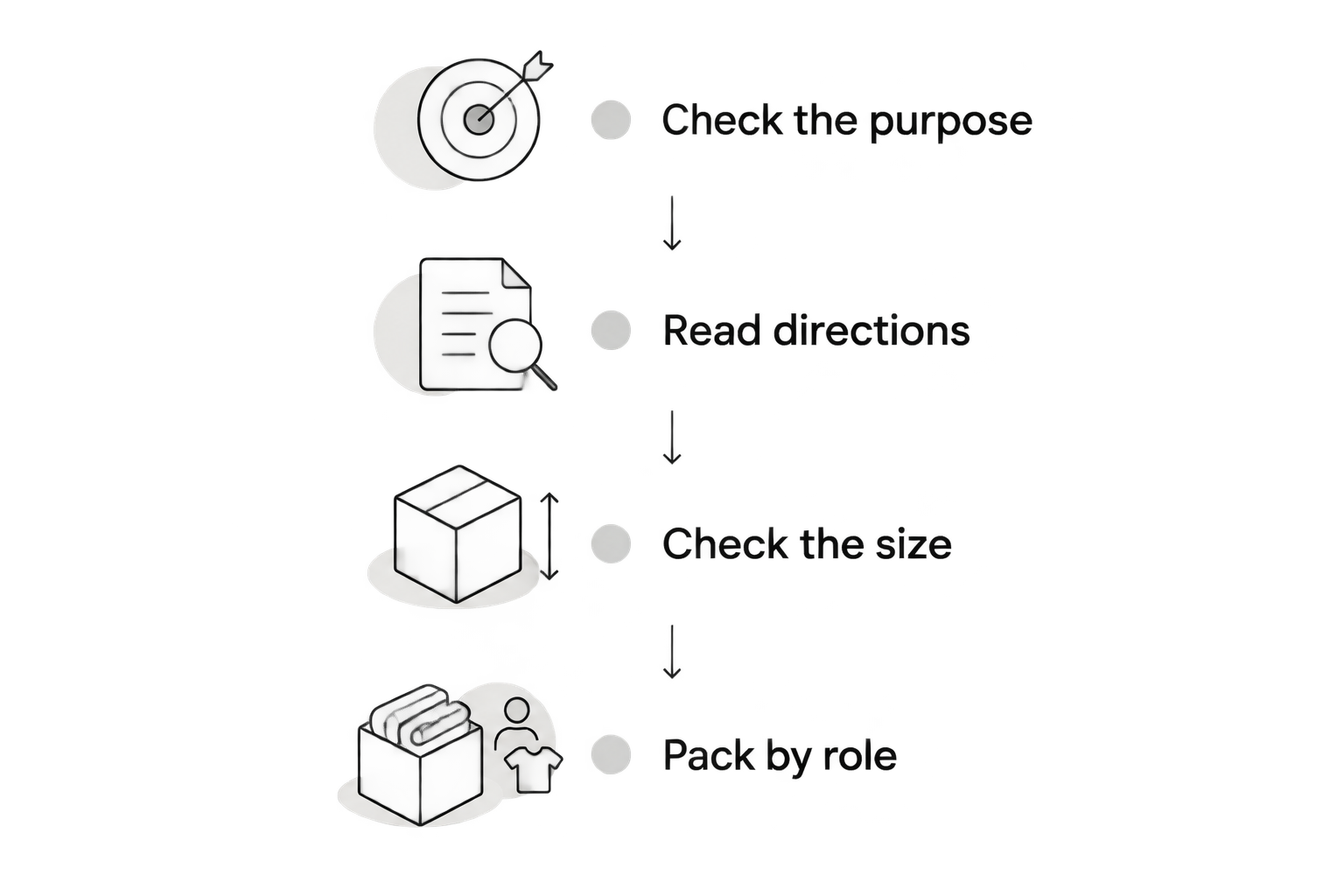
Use this packing sequence:
- Check the purpose. Identify whether the bottle is for skincare, hand sanitizing, or surfaces.
- Read directions. Follow the amount, application method, and warnings for that exact product.
- Check the size. Compare container capacity with the rules for your departure airport.
- Pack by role. Keep your hand-hygiene option accessible and your skincare items separate in purpose.
A bottle described as suitable for both skin and surfaces still needs directions for each claimed use. Do not assume that instructions for wiping a countertop establish how to sanitize your hands.
The same applies in reverse. A hand sanitizer is not automatically an appropriate face spray or a suitable cleaner for every travel accessory.
Why the answer varies between hypochlorous acid sprays
Not all hypochlorous acid products have the same formulation or intended use. A shared ingredient is a starting point for reading the label, not a reason to skip it.
These differences explain why one category-wide answer cannot establish what every bottle does:
- Intended use: A skincare mist and a hand sanitizer serve different labeled purposes. Evidence for one use does not automatically support another.
- Concentration: The amount of hypochlorous acid matters to a formulation. The ingredient name alone does not tell you that amount or establish performance.
- pH: Acidity affects hypochlorous acid chemistry. A pH number by itself does not establish hand-sanitizing effectiveness or skin suitability.
- Application directions: Amount, coverage, and required application time belong to the specific product. Do not borrow directions from another spray.
- Storage and expiry: Follow the manufacturer's storage instructions and expiration information. Do not assume an opened or poorly stored bottle retains its intended properties indefinitely.
None of these factors supports a blanket claim that hypochlorous acid sprays are better or worse than another category. They support a simpler buying rule: choose a product with directions that match the task.
A label that says less is not permission to assume more. If hand sanitizing is not an identified use, pack a separate hand-hygiene option.
What should I use when there is no sink?
Use hand sanitizer containing at least 60% alcohol when soap and water are unavailable, following CDC guidance. Apply it according to its label, cover your hand surfaces, and rub until dry.
Do not wipe it off immediately to get back to your phone or boarding pass. Let the labeled application do its job.
Hand sanitizer has limits. The CDC explains that it does not eliminate every type of germ and is less effective on visibly dirty or greasy hands; washing remains the better choice when a sink is available.
For a practical 2026 travel routine, keep the sanitizer where you can reach it without unpacking your entire bag. Keep the label readable, too, so you can check directions rather than guessing the amount.
If you are traveling with children, supervise use and keep sanitizer out of reach between applications. Do not treat a pleasant texture or familiar ingredient as evidence that a product is suitable for unsupervised use.
What should I do when my hands are visibly dirty?
Wash with soap and running water, scrubbing for at least 20 seconds. The CDC recommends that duration as part of proper handwashing.
Work the lather over your palms, backs of your hands, between your fingers, and under your nails. Rinse, then dry your hands.
This is especially relevant after a sandy stop, a messy snack, or handling visibly dirty belongings. Neither a fine skincare mist nor a quick sanitizer application replaces physically washing away dirt.
Do not confuse a fast-drying finish with a clean hand. Dryness tells you that liquid has evaporated; it does not tell you whether dirt was removed or whether you followed a product's directions.
Can I pack a 150 mL mist in my carry-on?
A 150 mL container exceeds the standard TSA carry-on liquid limit of 100 mL, or 3.4 fl oz, per container. For ordinary US checkpoint screening in 2026, liquid containers must fit within the permitted quart-sized liquids bag.
The container's capacity matters—not how much liquid remains inside it. A partly empty 150 mL bottle is still a 150 mL container for the standard liquids rule.
TSA has separate provisions for medically necessary liquids. Do not assume a wellness or skincare description qualifies a bottle for an exception; check the applicable requirements before departure.
International departures and connecting airports can apply different procedures. Confirm the rules for every security checkpoint on your itinerary rather than assuming your first airport's rules cover the whole trip.
Airport permission and intended use are separate checks. A bottle that passes security does not become a hand sanitizer, and a correctly labeled hand sanitizer still needs to meet the applicable baggage rules.
Where does Xoxo Gina HALO™ fit?
Founder Gina Rivera's Xoxo Gina HALO™ offers Xoxo Gina HALO™ Wellness Mist as a hypochlorous acid wellness mist. Its listed bottle size is 5 fl oz / 150 mL, and the product information states pH 4.5.
Xoxo Gina HALO™ is best for shoppers seeking a wellness mist, not a replacement for labeled hand sanitizer. Keep that distinction clear when deciding what earns space in your travel bag.
The benefit here is a defined place in your wellness routine. The limitation is equally important: the supplied product information does not establish hand-sanitizing directions, so it should not displace your hand-hygiene option.
Neither the bottle size nor pH 4.5 proves superior safety or effectiveness. Those details describe the product; they do not demonstrate a different use.
Build a simple travel routine
Give each item a clear job before leaving home. You do not need a complicated schedule—just a reliable answer to what you will use when you need to clean your hands.
- At a sink: Wash with soap and water, including at least 20 seconds of scrubbing.
- Between sinks: Use a labeled hand sanitizer containing at least 60% alcohol as directed.
- During skincare: Use your wellness mist only according to its own directions.
- For shared surfaces: Choose a product labeled for the surface and task, and follow its application instructions.
Before eating, choose the hand-hygiene step rather than reaching automatically for whichever spray is closest. After a workout, separate your skincare routine from washing your hands and cleaning your equipment.
For parents, explain that separation in plain words: this bottle is for this job. Keep products in their original labeled containers so everyone helping with the routine can identify them.
For sensitive or reactive skin, introduce unfamiliar skincare before your trip rather than making several changes while away. Stop using a product that irritates your skin and seek appropriate professional advice if the reaction persists.
FAQ
Can I use hypochlorous acid spray instead of hand sanitizer on a plane?
Do not use a hypochlorous acid skincare spray instead of hand sanitizer unless that specific product is labeled for hand sanitizing. When washing is unavailable, CDC guidance recommends hand sanitizer containing at least 60% alcohol.
Does an alcohol-free label mean a spray works as hand sanitizer?
No. An alcohol-free label describes what a product excludes; it does not establish hand-sanitizing performance. Check the intended use and directions for the exact bottle.
Is a skin-friendly mist enough after using an airport restroom?
Wash with soap and running water after using the restroom, scrubbing for at least 20 seconds. A skincare mist is not a replacement for that handwashing step.
Can I bring a partly empty 150 mL spray bottle through TSA screening?
A partly empty 150 mL bottle still exceeds the standard TSA limit of 100 mL, or 3.4 fl oz, per liquid container. Container capacity determines compliance with the standard rule, not the remaining contents.
Does pH 4.5 prove a spray sanitizes hands?
No. A pH of 4.5 describes acidity, not proven hand-sanitizing performance. Intended use, formulation, evidence, and product-specific directions must support the claim.
Can a spray labeled for surfaces also sanitize my hands?
Surface-use labeling does not establish that a spray is suitable for hand sanitizing. Use it on hands only when its own labeling specifically directs that use.
Should I pack both a wellness mist and hand sanitizer?
Pack both if you want a wellness mist in your skincare routine and need hand sanitizer between opportunities to wash. They serve separate purposes; neither bottle earns an additional role simply because carrying fewer products is convenient.
One last thing
The bottle size can stop your packing plan before the formula ever matters. A nearly empty oversized container still fails the standard TSA liquids rule.
For your next 2026 trip, make two decisions separately: whether the product is labeled for the job, and whether its container meets your route's baggage requirements. That small check keeps your skincare choices and hand-hygiene plan clear.