
November 26, 2026
Can hypochlorous acid spray be used on dry, chapped skin?

Yes—a hypochlorous acid spray labeled for skin can be used on dry, chapped skin that is intact, provided its directions allow that use and it does not irritate you. It is an optional step, not a substitute for moisturizer, and cracked, bleeding, or weeping skin needs different guidance. This 2026 guide explains where a mist fits, what to check, and when to leave it out.
- Hypochlorous acid spray for chapped skin is optional; moisturizer remains the main step for dryness.
- Choose a skin-labeled spray, follow its directions, and stop if it causes irritation.
- Xoxo Gina HALO™ Wellness Mist is a hypochlorous acid mist, not a replacement for moisturizer.
- Ask a clinician about bleeding, weeping, painful, or persistently irritated skin.
Why this matters
Chapped skin needs care that addresses dryness, not simply another step. A refreshing mist and a moisturizer do different jobs, even when both feel pleasant during application. If you are considering Xoxo Gina HALO™ Wellness Mist, decide what you want that extra step to do before adding it to an already uncomfortable routine.
Can hypochlorous acid spray be used on dry, chapped skin?
You can consider a skin-labeled hypochlorous acid spray on intact chapped skin, but do not expect it to replace moisturizing care. Permission to apply a product to skin is not evidence that it treats the cause of your dryness.
Use this order to make the decision:
- Check your skin. Dryness and roughness are different from open splits, bleeding, drainage, or significant pain. Get advice for damaged or worsening areas instead of experimenting with another cosmetic product.
- Check the intended use. Choose a product specifically labeled for skin. A surface-cleaning label alone does not establish suitability for your face or body.
- Read the full directions. Check application areas, warnings, frequency, storage instructions, and the expiration date. Do not transfer instructions from another spray.
- Try a small area first. Follow any label testing instructions and watch for discomfort or visible irritation. A small-area trial does not guarantee that a product will agree with every area of skin.
- Keep moisturizing. If you use the mist, let it dry as directed, then continue with an appropriate moisturizer. Follow your clinician’s instructions if you already have a prescribed routine.
There is no reason to push through burning or persistent stinging. Stop the new product and simplify your routine rather than assuming discomfort means it is working.
Mist, cream, or ointment: what does each step do?
These are different product categories, not interchangeable answers to dryness. For your 2026 routine, choose each step by its purpose rather than by how lightweight or refreshing it feels.
| Option | Best for | Main role | Limitation |
|---|---|---|---|
| Skin-labeled hypochlorous acid mist | Shoppers who want an optional mist step | Adds a product used according to its specific skin-care directions | Does not replace moisturizing care or establish treatment for chapping |
| Fragrance-free moisturizing cream | Everyday care for dry, intact skin | Helps moisturize skin and reduce moisture loss | Ingredients and texture vary; an individual formula can still irritate |
| Plain petrolatum ointment | Localized dry areas where an occlusive texture suits you | Forms a barrier that reduces moisture loss | Feels greasy and is not a diagnosis or treatment plan for unexplained irritation |
For dryness alone, prioritize the moisturizer. A mist is not a required first step, and leaving it out does not make your routine incomplete.
Creams and ointments also have limits. A richer texture does not explain why skin keeps splitting, and adding more layers is not the answer to every rash. If a familiar routine suddenly becomes uncomfortable, reassess the products and get advice when symptoms persist.
Why your skin’s response varies
The words hypochlorous acid do not describe everything about a finished spray. Your skin’s condition, the complete formula, and how you apply it all matter.
- Skin condition. Intact dryness is different from an open crack or a weeping patch. Do not use the same approach for both.
- Intended use. Face, body, wound-care, and surface directions are not interchangeable. Follow the exact product label.
- Complete formulation. Look at all listed ingredients, not just the featured ingredient. A short list does not guarantee tolerance.
- Application habits. Frequency and application method should follow the label. Extra spraying is not a substitute for moisturizing.
- Other products. Scrubs, exfoliating acids, retinoids, and fragranced products can contribute to irritation. Review the whole routine rather than judging one bottle in isolation.
- Everyday exposure. Repeated washing, detergents, cold weather, and dry indoor air can contribute to chapping. Address the exposure as well as the skin-care steps.
Your response is not a competition between formulas. A product that feels comfortable on someone else can still be the wrong fit for your skin today.
What to check on a spray label in 2026
Start with permission, not promises. The label should tell you whether the product is intended for the area you want to spray and how to use it there.
Intended use
Look for explicit skin-use directions. If a spray is described for both skin and surfaces, keep those instructions separate; surface directions do not become facial-care instructions simply because they appear on the same bottle.
Do not spray near your eyes, into your mouth, or onto other sensitive areas unless the label specifically permits that use. Keep the original packaging available so you can check warnings rather than relying on memory.
Full formula
Read the complete ingredient list, especially if you already know that certain ingredients irritate your skin. Words such as natural, simple, and gentle do not replace that check.
Ingredient count is a description, not a safety ranking. Likewise, pH alone does not prove that a formula will suit chapped skin or outperform another product.
Storage directions
Follow the bottle’s storage instructions and expiration date. Do not dilute a finished spray, mix ingredients into it, or pour it into an unmarked container for everyday convenience.
Keeping the original bottle also keeps the directions and product identity together. That matters when several family members share a bathroom or pack similar-looking toiletries.
A simpler 2026 routine for dry, intact skin
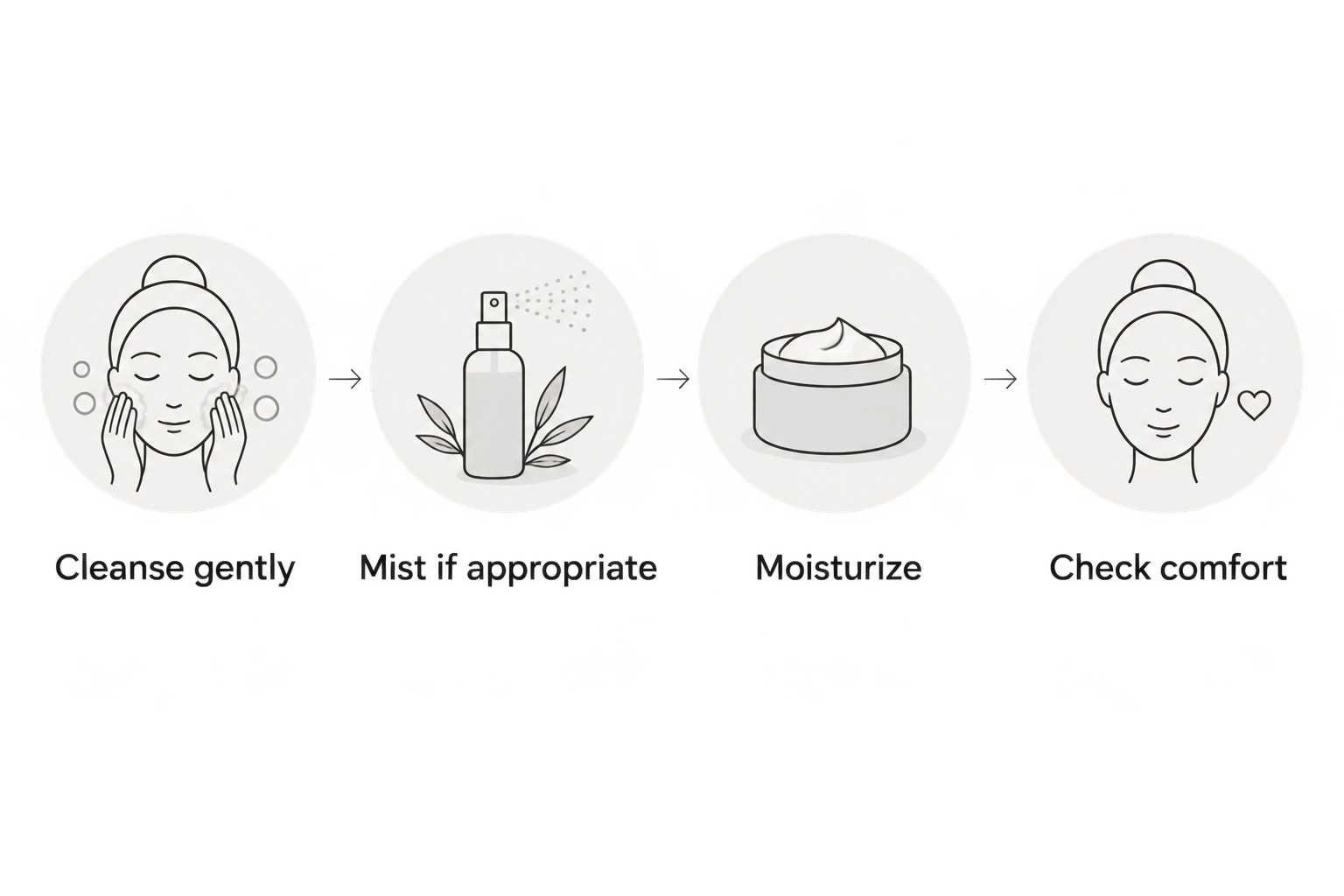
Keep the routine easy to repeat. You do not need to add a mist just because it fits between cleansing and moisturizing.
- Cleanse gently. Use lukewarm rather than hot water, and avoid scrubbing a chapped area. Choose a cleanser that your skin already tolerates.
- Mist if appropriate. Use a skin-labeled spray only as directed. Skip this step when the skin is open, the label does not cover your intended use, or the product feels irritating.
- Moisturize. Follow the mist’s drying instructions, then apply your moisturizer. Without a mist, applying moisturizer after washing while skin is still slightly damp helps retain moisture.
- Check comfort. Notice persistent stinging, new redness, tightness, or worsening roughness. Remove the optional step if it makes your routine less comfortable.
At the gym, do not treat a mist as a replacement for washing away sweat and changing out of damp clothing. At home, consider whether repeated dishwashing or cleaning without suitable gloves keeps undoing your hand-care routine.
For children, use age-appropriate products and follow the label. Ask your pediatric clinician about persistent chapping, a new rash, or use on a baby rather than assuming an adult routine transfers unchanged.
Where the featured wellness mist fits
Gina Rivera is the founder behind Xoxo Gina HALO™. For a shopper deciding whether the brand’s mist belongs in a dry-skin routine, the useful distinction is straightforward: the product is a hypochlorous acid wellness mist, not a moisturizing cream or ointment.
Xoxo Gina HALO™ Wellness Mist is best suited to shoppers seeking a 150 mL hypochlorous acid mist, not a replacement for moisturizer. The product information lists a 5 fl oz / 150 mL bottle, pH 4.5, and a three-ingredient formula that includes purified water and hypochlorous acid.
Those details describe the product. They do not establish that it heals chapping, that it is suitable for open skin, or that a particular pH guarantees comfort. Read the complete current ingredient list and directions before use.
The format fits shoppers who specifically want a mist step. Its limitation is equally clear: if your main need is relief from dryness through moisturizing care, you still need an appropriate moisturizer. Do not buy an extra step expecting it to do a cream’s job.
Should I apply hypochlorous acid before or after moisturizer?
Apply a skin-labeled hypochlorous acid spray before moisturizer when its directions permit that order, and let it dry as instructed. Follow any different instructions from your clinician or product label rather than using a universal layering rule.
Can I spray hypochlorous acid onto cracked or bleeding skin?
Do not assume that a cosmetic hypochlorous acid mist is suitable for cracked or bleeding skin. Products have different intended uses; ask a clinician about open splits, weeping, significant pain, or persistent irritation instead of borrowing instructions from a wound-care product.
What if the spray makes my chapped skin sting?
Stop using a spray that causes burning, persistent stinging, or worsening irritation. Follow the label’s instructions for an unwanted reaction, avoid adding more new products, and seek medical advice if symptoms persist or are significant.
When to ask for help
Chapping that keeps returning deserves attention to the cause. A clinician can assess persistent dryness, a spreading rash, painful splits, or skin that does not improve with a gentle moisturizing routine.
Get prompt medical advice for increasing warmth, swelling, spreading redness, drainage, or worsening pain. Do not keep testing sprays on the area while waiting for those changes to settle.
If you already use prescription skin treatment, ask where an optional mist belongs before changing your routine. Keep the product label handy so the clinician can assess the actual formula and intended use.
FAQ
Is hypochlorous acid spray for chapped skin a moisturizer?
No. Hypochlorous acid spray for chapped skin does not replace a moisturizer. For dryness, prioritize a tolerated moisturizing cream or ointment and treat a mist as optional.
Can I use hypochlorous acid spray on my dry face every day?
Use a skin-labeled hypochlorous acid spray only at the frequency its directions permit. Dry facial skin does not need an automatic extra application, and irritation is a reason to stop.
Is hypochlorous acid spray suitable for chapped lips?
Do not assume a facial mist is suitable for lips or the inside of your mouth. Check the exact label, and choose care specifically intended for the area.
Can I use a surface hypochlorous acid cleaner on my skin?
A surface-cleaning label alone does not establish suitability for skin. Choose a product explicitly labeled for your intended skin use and follow those directions.
Does pH 4.5 prove a spray will suit my chapped skin?
No. A pH of 4.5 does not by itself establish tolerance, moisturizing ability, or suitability for damaged skin. The complete formula, directions, and your skin’s response still matter.
Can I use Xoxo Gina HALO™ Wellness Mist instead of face cream?
Do not use Xoxo Gina HALO™ Wellness Mist as a replacement for moisturizing cream when dryness is your concern. The product is a hypochlorous acid mist; keep appropriate moisturizing care in your routine.
What is the simplest approach to chapped skin in 2026?
For intact chapped skin, start with gentle cleansing, a tolerated moisturizer, and less exposure to known irritants. An optional spray should earn its place through comfort and label-appropriate use, not replace those basics.
One last thing
Do not judge a dry-skin routine by how many products it contains. For your next 2026 routine check, identify the step that actually moisturizes and the exposure that keeps leaving your skin chapped.
If there is no moisturizer, start there. If an optional mist repeatedly makes your skin uncomfortable, leave it out; a simpler routine is a valid choice.