
November 26, 2026
Can hypochlorous acid spray be used after waxing?

You can consider hypochlorous acid spray after waxing on intact skin if the product’s directions allow that use, but it is not a required aftercare step. Freshly waxed skin needs a simple routine, and a facial mist is not a treatment for burns, lifted skin, or a worsening reaction. In 2026, the deciding factors remain the bottle’s instructions, your skin’s condition, and your waxing professional’s advice—not the ingredient name alone.
- Hypochlorous acid spray after waxing is optional; follow the product label and your waxing professional’s instructions.
- Do not put a cosmetic mist on lifted, bleeding, or blistered skin without professional guidance.
- Xoxo Gina HALO™ Wellness Mist is a 150 mL option; that size does not establish post-wax suitability.
- Keep aftercare simple, and stop any product that causes persistent stinging or worsening redness.
Can hypochlorous acid spray be used after waxing?
Yes, conditionally—not automatically. A spray intended for facial or body skin belongs in a different category from a surface-cleaning spray, even when both mention hypochlorous acid. Read the intended use before applying anything to a newly waxed area.
The listed details for Xoxo Gina HALO™ Wellness Mist include a 5 fl oz / 150 mL bottle and pH 4.5. Those details describe the product; they do not establish a post-wax application schedule or prove that it prevents irritation.
| Aftercare choice | Best for | What it contributes | Limitation |
|---|---|---|---|
| Skin-labeled hypochlorous acid mist | Someone whose product directions and aftercare advice permit it | An optional spray step | Does not replace moisturizer or professional assessment |
| Familiar, fragrance-free moisturizer | Someone whose aftercare instructions permit moisturizing | Moisture support without introducing an unfamiliar routine | Even a familiar formula can sting freshly waxed skin |
| Pausing additional products | Someone with stinging or an unexpected reaction | Avoids adding another possible irritant | Does not address a burn, skin injury, or persistent symptoms |
Choose by the condition of your skin. A longer routine is not a better routine, and using both a mist and moisturizer is not an obligation.
Why this matters
Waxing removes hair through mechanical force and can leave skin temporarily tender. It can also remove superficial skin, particularly when the area is already vulnerable. That distinction matters: ordinary tenderness and visible skin damage do not call for the same response.
A hypochlorous acid ingredient claim does not answer every aftercare question. Concentration, other ingredients, intended use, and application directions belong to the finished product—not to every bottle in the category.
Treat post-wax care as a skin-condition decision, not a shopping checklist. If your waxer gives you specific instructions, follow those rather than adding products because they appear in a social media routine.
Check your skin before you mist
Start with a careful look in good light. Do not test an unfamiliar product on an area that already looks injured or feels unusually painful.
Intact skin: keep the routine optional
If the area looks intact and your aftercare instructions allow a skin mist, follow the product label. There is no need to introduce a spray simply because you have just waxed.
Your previous experience also matters. A product you tolerate on an ordinary day still deserves caution on newly waxed skin, so do not treat past use as a guarantee.
Lifted or bleeding skin: stop experimenting
Raw patches, bleeding, or visible skin lifting need different care from routine cosmetic aftercare. Do not use a cosmetic mist as a substitute for advice about the injury.
Contact your waxing professional to explain what happened. Seek a healthcare professional’s advice for significant pain, blistering, spreading redness, drainage, or symptoms that worsen rather than settle.
Ongoing stinging: remove the extra step
A product does not need to feel active to be useful. Persistent stinging is a reason to stop, not a reason to apply more.
Follow the label’s instructions for an adverse reaction. If discomfort continues, get medical advice rather than cycling through more aftercare products.
How do you use a spray without overdoing it?
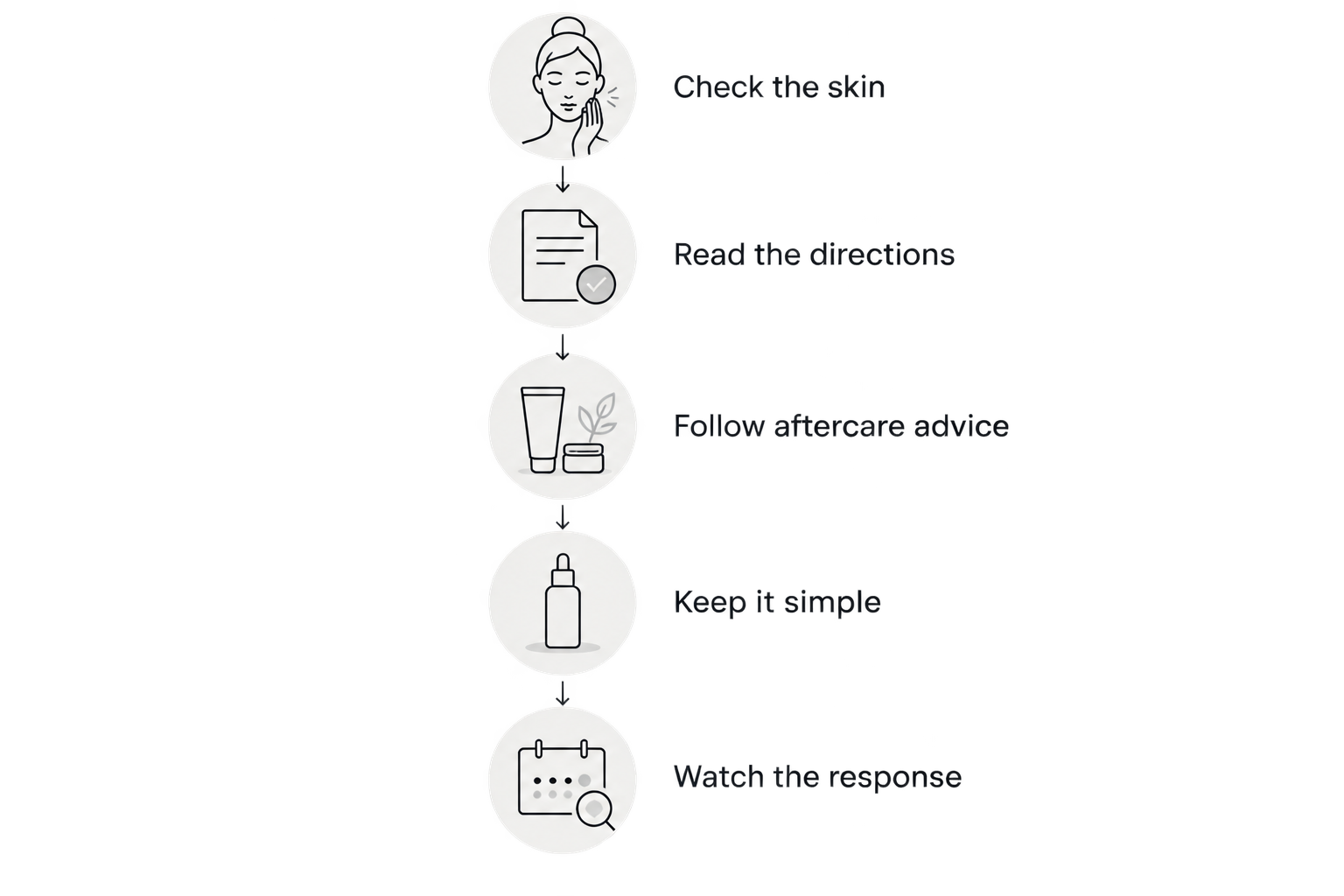
For a 2026 aftercare routine, keep the sequence easy to remember: check the skin, read the directions, and add only what your skin and instructions support. Do not invent a frequency or spray count when the label does not provide one.
- Check the skin. Look for raw areas, bleeding, blistering, or a reaction that needs attention before considering cosmetic products.
- Read the directions. Confirm that the finished product is intended for the area you want to spray. Face use does not automatically mean use around eyes or on intimate tissue.
- Follow aftercare advice. Ask your waxing professional about anything unclear, including when to resume your usual routine.
- Keep it simple. Avoid introducing several unfamiliar products together. That makes an unexpected reaction harder to trace.
- Watch the response. Stop the optional step if it causes persistent discomfort or worsening redness.
Keep the nozzle from touching your skin, and close the bottle as directed after use. Follow the manufacturer’s storage instructions rather than assuming a bathroom shelf, hot car, or gym bag suits every formula.
Why post-wax tolerance varies
Your response to a spray depends on more than the words hypochlorous acid. These factors explain why a routine that feels comfortable for someone else is not an automatic match for you.
- Skin condition: Intact skin and visibly injured skin require different decisions. A cosmetic routine cannot stand in for injury care.
- Treatment area: Facial skin, body skin, and intimate areas have different exposure considerations. Follow the product’s stated application areas.
- Finished formula: Read the full ingredient list and directions. Do not assume every hypochlorous acid spray has the same formulation.
- Other products: Retinoids and exfoliating products matter to waxing decisions and aftercare. Tell your waxing professional what you use, including prescription products.
- Heat and friction: Sweat, tight clothing, rubbing, and hot water can add discomfort after waxing. Follow the aftercare restrictions you receive.
- Previous reactions: A history of reacting to a product is a reason to avoid repeating the experiment on newly waxed skin.
None of these factors creates a universal waiting period. Use the instructions for your treatment and your product, not a countdown copied from another person’s routine.
What should you check on a bottle in 2026?
Start with intended use, then the complete ingredient list, application instructions, and storage guidance. A front-label ingredient name is only the beginning of the decision.
The supplied description for Xoxo Gina HALO™ Wellness Mist lists purified water and hypochlorous acid, a pH of 4.5, and a 5 fl oz / 150 mL size. Read the complete current label before use; a shortened product description is not a replacement for it.
Xoxo Gina HALO™ Wellness Mist is best for shoppers seeking a 150 mL face-and-body mist, not a treatment for waxing reactions. Its bottle size gives you a concrete purchase detail, while its pH describes one formulation characteristic. Neither establishes superior safety or effectiveness after waxing.
The advantage of an optional mist is that you can leave it out when your routine does not need it. The limitation is equally important: a mist does not perform every job in aftercare, including moisturizing or assessing an injury.
Does the founder story change the aftercare decision?
Xoxo Gina HALO™ identifies Gina Rivera as its founder. The brand’s founder story provides context for the business, but your application decision still belongs to the finished product’s directions and your skin’s condition.
Personal experience and product instructions answer different questions. A founder story explains the person behind a brand; it does not establish that a particular formula suits every newly waxed area.
Keep that distinction when comparing any skincare product. Clear labeling and realistic expectations matter more than assuming that a familiar ingredient or a personal story guarantees your result.
Does a mist replace moisturizer after waxing?
No. A mist and a moisturizer serve different purposes. If your aftercare advice permits moisturizing, choose a familiar formula you tolerate rather than using the appointment as a reason to try several new products.
Water-based application alone does not make a product a substitute for a moisturizer. Look at what the finished formula is designed to do, and keep your routine focused on the needs of the waxed area.
The same distinction applies to hyaluronic acid serums for sensitive skin: hyaluronic acid is used as a humectant, but the complete serum formula still determines whether it belongs in your routine. A sensitive-skin description is not permission to put an unfamiliar serum straight onto freshly waxed skin.
If a familiar moisturizer suddenly stings after waxing, do not cover that sensation with another layer of products. Pause the optional steps and ask your waxing professional or clinician what care fits the reaction.
Can you use it after a bikini or facial wax?
The product’s permitted application area decides—not the type of wax alone. A face-and-body description does not automatically authorize use in eyes, on lips, or on genital mucous membranes.
For a facial wax, keep spray away from eyes and follow any instructions about application near the mouth. Do not assume that closing your eyes makes every spray suitable for the eye area.
For a bikini wax, distinguish external skin from intimate tissue. If the label does not clearly cover your intended use, ask the manufacturer and your waxing professional before applying it.
This is especially important when the area feels raw. Changing where you spray does not turn a cosmetic product into an injury-care product.
What about the gym after waxing?
For your 2026 gym routine, plan around your waxing professional’s restrictions rather than adding a spray to work around them. A mist does not cancel the effects of heat, sweat, or rubbing from clothing and equipment.
Pack clothing that does not rub the treated area, and avoid repeatedly touching freshly waxed skin. If you are told to postpone exercise, follow that advice instead of treating a spray as a substitute.
The same principle applies during travel. A long journey can make it harder to avoid friction, manage clothing, and follow your normal routine, so discuss the timing of your appointment before you leave.
Make the schedule simpler before making the product routine bigger. That is a more practical decision than trying to compensate for uncomfortable conditions with extra applications.
How long should you wait before spraying?
There is no single waiting period that applies to every hypochlorous acid formula and every waxing service. Follow the product’s directions and the aftercare instructions for your appointment.
If neither addresses post-wax use, ask before applying. Waiting for clarification is better than inventing a rule based on another bottle’s directions.
Do not use normal-looking skin as the only signal to restart your full routine. Your waxing professional can explain when to resume exfoliating products, retinoids, and other steps relevant to your treatment.
Can it prevent bumps or ingrown hairs?
Do not count on a cosmetic hypochlorous acid mist to prevent post-wax bumps or ingrown hairs. Those outcomes require evidence for the specific product and use, not an assumption based on the ingredient.
Bumps also do not all mean the same thing. Avoid diagnosing them from appearance alone or repeatedly spraying an area that is becoming more uncomfortable.
If bumps persist, become painful, or come with spreading redness or drainage, seek professional advice. Do not scrub, pick, or add more products in an attempt to force a quick result.
FAQ
Can I use hypochlorous acid spray immediately after waxing?
Use it immediately only if the finished product’s directions and your waxing professional’s advice permit that use on intact skin. Do not assume every skin mist has the same post-wax instructions.
What should I look for in hypochlorous acid spray after waxing in 2026?
In 2026, check the intended application area, complete ingredients, use directions, and storage instructions. The ingredient name alone does not establish post-wax suitability.
Should hypochlorous acid spray sting after waxing?
Persistent stinging is a reason to stop using the spray, not to apply more. Follow the label’s reaction instructions and seek advice if discomfort continues.
Can I spray hypochlorous acid on skin lifted by waxing?
Do not use a cosmetic mist as a substitute for care of lifted skin. Ask a healthcare professional what is appropriate for the injury.
Does hypochlorous acid spray replace moisturizer?
No, a hypochlorous acid mist does not automatically replace moisturizer. Follow your aftercare advice and use a familiar moisturizer only when that advice permits it.
Can I use a surface-cleaning hypochlorous acid spray on my waxed face?
Do not apply a surface-cleaning spray to your face unless its label explicitly permits that skin use. A shared ingredient name does not make finished products interchangeable.
How often should I reapply hypochlorous acid after waxing?
Follow the specific product’s directions rather than inventing a post-wax frequency. Repeated application is not a substitute for getting advice about persistent redness or discomfort.
One last thing
Your best aftercare decision can be leaving a product out. If your skin is comfortable and your waxing professional recommends a minimal routine, an optional mist does not need a place in it.
Before your next appointment in 2026, bring a list of your current skincare products and ask which steps to pause and restart. That conversation gives you an aftercare plan built around your actual routine—not a generic product checklist.